Twenty-Three Years and Counting

The definition of insanity, it’s often said, is doing the same thing over and over again and expecting different results. As it happens, this isn’t actually the definition of insanity. And it’s unlikely that the pithy quote actually originates with Albert Einstein, Benjamin Franklin, or Mark Twain, though it’s often attributed to one of the three.

Legal and historical quibbles aside, the central point is a valid one: repeating a behavior or action that’s yielded one result in the hopes of achieving a different result… well, it doesn’t make a lot of sense.

And yet, this is exactly what’s going on in Hernando County, Florida, where county commissioners recently voted 4-to-1 “to retain the 23-year policy of loaning out cat traps to catch feral felines.” [1] This is no TNR program; cats caught—especially those that aren’t socialized—will, more than likely, be killed by Hernando County Animal Services.*

And, according to Commissioner Diane Rowden, who cast the sole dissenting vote, the policy isn’t working out well for the community, either. “We’ve been doing this over, and over and over for years and years and years and it doesn’t seem to be really accomplishing anything,” she told Hernando Today. “They just keep multiplying out there.”

“Lisa Centonze, managing veterinarian of animal services, has called the process of lending out traps ‘inefficient, costly and inhumane.’” [1]

Twenty-three years. Let that sink in for a moment.

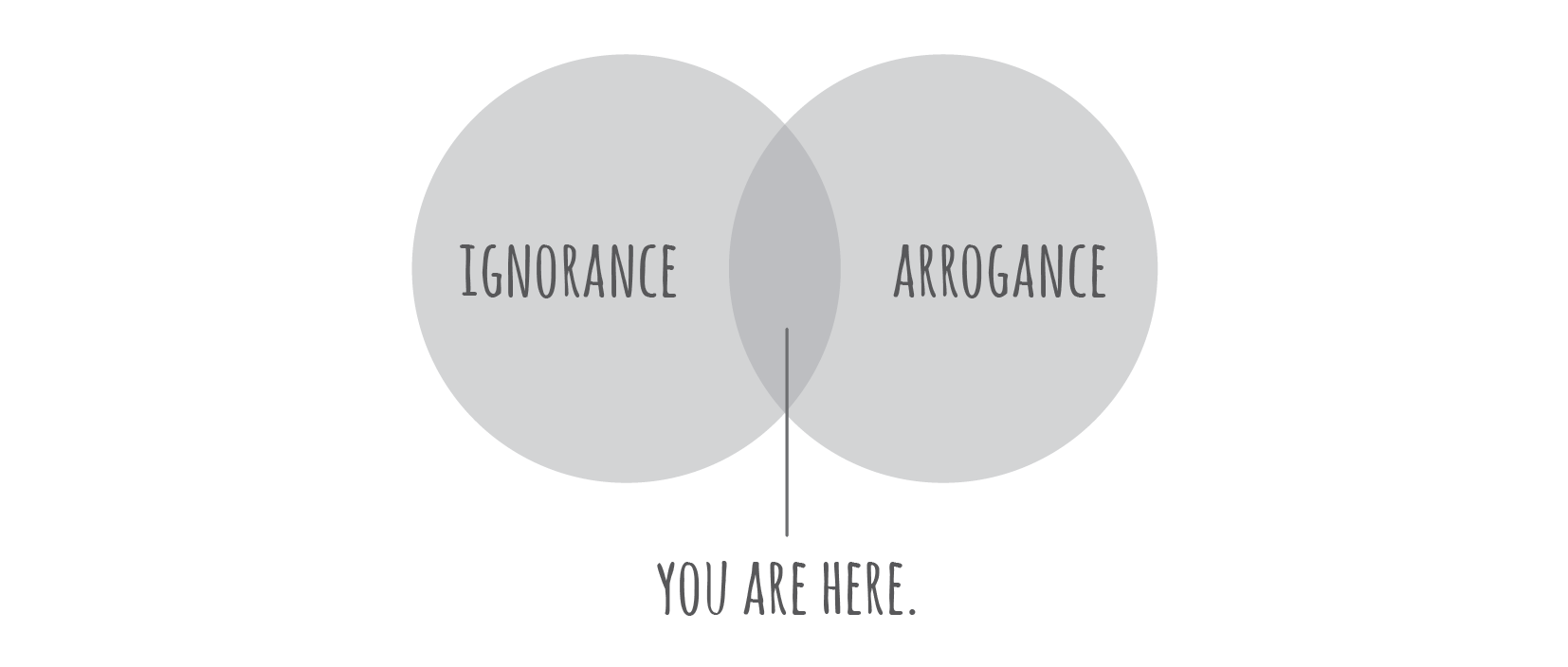
The changes to animal sheltering—and companion animal welfare in general—in this country over the past 23 years have been nothing short of revolutionary. Attitudes about stray, abandoned, and feral cats have undergone a radical shift as well. Indeed, it was 1990 when, as an article in the January/February issue of Best Friends magazine (from which the illustration above is borrowed) explains, Alley Cat Allies “[gave] voice to feral cats on a national stage and introduces trap/neuter/return as the most humane and practical method for relating to community cats.” [2] (Just one year earlier, reports Nathan Winograd in Redemption: The myth of pet overpopulation and the no kill revolution in America, “the first battle flag of the No Kill revolution was symbolically being raised” at the San Francisco SPCA. [3])

Meanwhile, in Hernando County, the budget for Animal Services has been slashed 45 percent over the past three years, and the number full-time employees cut nearly in half since 2011. [4] None of which bodes well for the cats in its shelter system—“some 280” of them last year, according to the story in Hernando Today, the majority of which never made it out alive. [1]

In fact, the statistics are probably far worse. In nearby Hillsborough County, for example, Animal Services impounded 10,635 cats in 2012; only about 20 percent made it out the front door. Granted, the human population of Hillsborough is about seven times that of Hernando County, but that doesn’t explain intake numbers 38 times greater. Perhaps “some 280 cats” were brought in via loaned traps. Unfortunately, Hernando County Animal Services doesn’t post such data online (another sign of an agency in need of reform).

Whether we’re talking about 280 cats—or, as I suspect, maybe 10 times that many—it’s troubling to see Hernando County continue, for 23 years now, its endorsement of lethal (non) control methods. As Rowden points out, they don’t seem to be accomplishing anything.

Maybe it’s not insanity, exactly—but it still doesn’t make any sense.

* As stated in Article III Section 6-41 of Hernando County Code of Ordinances: “The animal shelter may adopt out or release impounded cats after three (3) days and may euthanize impounded cats after five (5) days, measured from the date of impoundment. Notwithstanding the foregoing, the county veterinarian or his/her designee may euthanize an impounded cat if such animal is in imminent danger of death from disease or trauma or is determined to be feral. Euthanasia of cats to prevent overcrowding will be conducted using the following priorities, to be determined by the county veterinarian or his/her designee: (1) Sick, diseased, or injured; (2) Feral; (3) Unadoptable.”

Literature Cited

1. Bates, M.D. (2013, May 7). Cat traps here to stay. Hernando Today, from http://www.hernandotoday.com/he/list/news/cat-traps-here-to-stay-b82488676z1

2. n.a., “A brief history of the no-kill movement.” Best Friends 2013. January/February. p. 16–17.

3. Winograd, N.J., Redemption: The myth of pet overpopulation and the no kill revolution in America. 2007: Almaden Books.

4. n.a., Hernando County, Florida, Fiscal 2013 Approved Budget. 2012, Office of Management and Budget: Brooksville. http://www.co.hernando.fl.us/bocc/budget/budget2013/Approved%202013%20Budget%20Book.pdf

Meet Best Friends’ Cat Initiatives Analyst!

Impact.

In the end, my decision to join Best Friends Animal Society (which became official last week) came down to that one factor: impact. As a member of their National Programs team, I’ll have the opportunity to improve the lives of stray, abandoned, and feral cats on a scale I could only dream of three years ago when I launched Vox Felina.

My position—Cat Initiatives Analyst—includes a broad range of responsibilities, but most of my attention will be focused on the intersection of science, policy, and communications. In other words, using the relevant science to strengthen Best Friends’ legislative and outreach efforts on behalf of the country’s community cats.

Clearly, this is a job made for the “feral cat nerd.”

And, in a way, it’s also the culmination of a journey that began with Best Friends. As regular readers will recall, it was my involvement five-and-a-half years ago with the Great Kitty Rescue that introduced me to feral cat management and TNR. And set in motion a series of events that led to the creation of this blog.

Speaking of which: What happens to Vox Felina now?

From our very first conversation about joining the team, the people at Best Friends have made it clear that they admire, and see a need for, what I’m doing with Vox Felina—and that they want me to continue that work. I, therefore, don’t envision any substantive changes at all.

As I say, it’s all about impact.

I’m incredibly excited to begin this next chapter, and enormously grateful to Best Friends for the opportunity. Grateful, too, for the community of Vox Felina supporters; without your encouragement and engagement, the opportunity may never have come my way.

Thank you.

Peter
May 2013
Phoenix, AZ

Common Sense for Cats

Have you seen the just-launched Common Sense for Cats website yet? It’s an Alley Cat Allies initiative that the organization describes as “an online resource to educate about outdoor cats and Trap-Neuter-Return, the only humane and effective program to stabilize—and reduce—outdoor cat populations.”

The site serves as a useful primer—courtesy of some very nice visuals—for those not already familiar with TNR and the larger “cat debate.” It’s easy to share via Facebook and Twitter, and there’s even a petition you can sign “to help ensure that humane policies for cats are a major take-home message for local policymakers across the country.” Signatures will be presented “at the upcoming meetings for the National Association of Counties, National League of Cities, and the United States Conference of Mayors to let them know that Americans want humane policies for cats in their communities.” (Just last week, Alley Cat Allies delivered more than 55,000 signatures to the Smithsonian Institution in response to the publication earlier this year of agenda-driven junk science produced by researchers at the Smithsonian Conservation Biology Institute.)

Thank you, Alley Cat Allies!

Hillsborough County Commissioners Approve TNR Plan

It doesn’t happen often enough—but every now and then, common sense, reason, and compassion win the day. Today is such a day.

This morning Hillsborough County commissioners voted 6-to-1 in favor of Hillsborough County Animal Services’ recently announced TNR pilot program—part of director Ian Hallett’s proposal for reducing shelter killing (PDF).

This is a huge victory for TNR supporters (who, as I understand it, packed today’s meeting), especially in light of the no-holds-barred campaign waged by opponents from the Hillsborough County Veterinary Medical Society and Hillsborough Animal Health Foundation. In the end, it seems, all the misinformation and scare-mongering—and their lack of a feasible alternative to TNR—failed to impress county commissioners. (One wonders what sort of impression the campaign made on their clients.)

As I understand it, HCAS’s program would be modeled on the successful Feral Freedom programs underway in Jacksonville, FL, or San José, CA. However, it’s clear from people already involved with TNR in Hillsborough County that some key aspects of the program still need to be worked out.

•     •     •

To my friends and colleagues in Hillsborough County, whose tireless efforts made this victory possible, congratulations! And thank you for all you’re doing on behalf of your community’s stray, abandoned, and feral cats!

Hillsborough County Veterinary Medical Society Joins Witch-Hunt

Hillsborough County (Florida) Animal Services’ modest step in adopting TNR is met with fierce resistance by some in the veterinary community. Their alternative plan? Uninformed, unfunded, and unworkable.

Among the agenda items to be addressed when the Hillsborough County (FL) Board of Commissioners meets Wednesday morning: “approve the Animal Services Department’s Plan to Increase Live Outcomes in order to lower the euthanasia rate at the County’s animal shelter.” A no-brainer, right? I mean, who could object to something like that?

Although regular readers undoubtedly know where this is going, I’ll bet there are plenty of Hillsborough County residents who are puzzled by the opposition from the Hillsborough County Veterinary Medical Society and Hillsborough Animal Health Foundation. Earlier this month, Don Thompson and his wife, Dr. Katie Thompson, owners of the Veterinary Center at Fishhawk, issued an e-blast warning of “Thousands of cats dumped on our streets.” “Sound [sic] impossible,” the e-mail continued, “but that is exactly what our new Animal Services Director is planning.” (Katie Thompson is an HCVMS member and sits on the county’s Animal Advisory Committee; Don Thompson is the executive director of HAHF, and recently spoke on behalf of the Florida Veterinary Medical Association in opposition to HB 1127.)

Continue Reading »

Vox Felina Turns Three

Given the events of this week, it seems almost inappropriate to celebrate the three-year anniversary of my modest little blog.

On the other hand, it seems like an excellent time to express my sincere gratitude to the many Vox Felina supporters. You make the long (often tedious) hours of work worthwhile, and—more important—are making a real difference for the stray, abandoned, and feral cats in your communities.

Thank you.

Peter

Pet-Friendly Bills Struggle in the Florida Legislature

Despite an early victory in the House Agriculture and Natural Resources Subcommittee, Florida’s HB 1121, the “Community Cat Act,” didn’t make it out of committee to be voted on this session. Ditto for HB 1127, the “Pets’ Trust” bill.

It was a disappointing session for those of interested in saving the lives of companion animals—one made worse by the kind of lazy, irresponsible media coverage that only serves to misinform the public. (It does appear, however, that SB 674, which would require shelters and animal control agencies to maintain—and make available to the public—intake and disposition records, is receiving broad approval.)

I was, not surprisingly, watching HB 1121 more closely than the others—but when a helpful reader pointed out that discussion of HB 1127 in the Local and Federal Affairs Committee on April 4th was broadcast online, I had to take a look. Especially when she told me who was speaking out in opposition to the bill.

Continue Reading »

Animal Wise Radio (April 7)

If you missed this week’s Animal Wise Radio show, when I discussed the recent Ted Williams/Audubon incident—and how this fits into the ongoing TNR debate nationwide—with hosts Mike Fry and Beth Nelson, you can check the complete show in podcast format). An MP3 file (9.6 MB) of our conversation (approximately 21 minutes) is available here.

As always, many thanks to Mike and Beth—and everybody else who helps pull the show together—for having me on!

Feral Cat Mafia T-shirts and Hoodies—Light Colors Now Available!

Well, it’s been quite a week—the response to the Feral Cat Mafia prints, t-shirts, hoodies, and totes has been overwhelmingly positive! And, as promised, the design is now available for black printing on light backgrounds.

To visit the online shop, click here.

Unfortunately, distinguishing the black version from the white one can be a little tricky. Once you select the particular product you’re interested in, double-check to make sure the product name reads The Feral Cat Mafia (BLACK printing on light background).

(Note: For art prints, either version will print black on white.)

As with the previous version, all proceeds will be donated to FixNation, one of the country’s most highly regarded TNR/low-cost spay/neuter clinics (upon whose board I proudly serve).

Your ongoing support is greatly appreciated!

Police Implicated in Deaths of Stray Cats

Ada Pierson has been feeding stray cats for years outside of her Stryker, Ohio, home. But according to Toledo’s WTVG/13ABC, all of them—a dozen or so—disappeared in January. And Pierson’s blaming Stryker police officers.

“They were either shot or they were drowned,” she explained to 13ABC reporter Christine Long. “I think it’s horrible, they did not deserve what they got. Why Stryker Police thought it was their duty to do something, I don’t know.”

An investigation, headed up by the sheriff’s department in neighboring Fulton County, has been completed and the case has been turned over to a Bryan Municipal Court prosecutor. If comments made by Stryker Mayor Dan Hughes are any indication, though, justice may be elusive.

Continue Reading »

Now Available—Feral Cat Mafia T-shirts!

After three blog posts and several comments to online news stories, I thought it was time for a lighter response to the absurdity of recent events. And so, inspired by the comments of the dismissed-then-reinstated editor-at-large for Audubon magazine, Ted Williams, made in the immediate aftermath of his inflammatory Orlando Sentinel op-ed, I’m pleased to introduce* a line of Feral Cat Mafia products.

In addition to t-shirts ($22 each, available only in dark colors for now), there are hoodies, tote bags, and art prints available. Other items will be added shortly.

All proceeds will be donated to FixNation, one of the country’s most highly regarded TNR/low-cost spay/neuter clinics (upon whose board I proudly serve).

* With much help from two colleagues, whose design and technical skills proved invaluable.

PETA Threatens Florida’s Community Cat Act

Less than two weeks after the “Community Cat Act” received unanimous approval from Florida’s House Agriculture and Natural Resources Subcommittee, the bill (SB 1320) is scheduled to be heard and voted on by the Senate’s Agriculture Committee Monday afternoon.

As I reported in my previous post, the Florida Veterinary Medical Association came out in opposition to the proposed legislation last week, their “concerns” (PDF) a mix of misinformation and scaremongering (similar to the various complaints made by Audubon Florida when HB 1121 was before the Agriculture and Natural Resources Subcommittee).

On Friday, I received word of another longtime TNR opponent stepping into the fray—and this one might surprise some readers: PETA.

Continue Reading »

Florida Veterinary Medical Association Opposes TNR-Friendly Bill

Among the “values and objectives that are still revered” by the 85-year-old Florida Veterinary Medical Association is “to further the education of its members.” So why is the organization going out of its way to misinform them about House Bill 1121, “The Community Cat Act”?

The bill, authored by Best Friends Animal Society and supported by Alley Cat Allies and the Humane Society of the United States, made it through the House Agriculture and Natural Resources Subcommittee with unanimous approval last week—despite opposition from, among others, Audubon Florida (which was trying to make the most of the Smithsonian/U.S. Fish and Wildlife Service paper before too many people start asking questions).

Then came the FVMA with their “concerns.”

Continue Reading »

Audubon Shows Their True Colors

Had David Yarnold waited just a few more days, the announcement might have been taken as an April Fools joke: Ted Williams is back.

“After doing the review we promised,” explained Yarnold, president and CEO of the National Audubon Society, in a blog post Tuesday, “which included extensive fact-checking and a look at Ted’s work for other publications, we’re satisfied that there’s no larger pattern of missteps that would warrant further disciplinary action.”

Just a week-and-a-half ago Audubon “suspended its contract” with Williams amidst a firestorm of complaints about an Orlando Sentinel op-ed in which he suggested that acetaminophen poisoning was one of “two effective, humane alternatives to the cat hell of TNR.”

No pattern of missteps?

Continue Reading »

Brighter Days Ahead for the Sunshine State’s Cats?

Feral cat advocates were more than ready for some good news when, last Wednesday afternoon, we got some. Florida House Bill 1121, supported by Best Friends Animal Society, Alley Cat Allies, and the Humane Society of the United States, made it through the 11-member House Agriculture and Natural Resources Subcommittee with unanimous approval. Among the key provisions of “The Community Cat Act,” as it’s come to be known, are protections for community cat caregivers (“release of a community cat by a community cat program is not abandonment or unlawful release”) and veterinarians participating in community cat programs (who would be “immune from criminal and civil liability for any decisions made or services rendered… except for willful and wanton misconduct.”)

As the bill’s sponsor, Rep. Holly Raschein (R-Key Largo), explained to Keynoter reporter Ryan McCarthy: “The basis for the bill is it’s not mandatory. It gives local governments an option if they want to deal with feral cat colonies.” [1]

The message didn’t seem to get through to opponents of HB 1121, however, who, as expected, brought to Tallahassee their usual misinformation and scaremongering.

Continue Reading »

Natural Selection, Pronto!

Cliff swallows (Petrochelidon pyrrhonata) in Cayucos, CA. Photo courtesy of Wikimedia Commons and Marlin Harms.

Swallows evolve shorter wings to avoid cars, study suggests.

Over the past few years, I’ve grown increasingly skeptical of such headlines. Still, sometimes the research really does live up to the media hype. This would seem to be the case here, in an NBC News story about the recently published work of Charles Brown and Mary Bomberger Brown.

Collecting and studying the “salvageable specimens” of cliff swallows killed along the roads surrounding southwestern Nebraska’s Cedar Point Biological Station over the past 30 years, Brown and Brown found the numbers of road-killed birds “declined sharply.” [1] And the trend couldn’t be explained by the population of swallows living nearby (which increased over the study period), traffic volume (which “either did not change significantly or increased, depending on the metric used”), or the number of avian scavengers in the area (“as none showed significant increases in our study area”).

“Thus, none of the obvious factors that confound most road-kill surveys applied to our study,” explain the researchers in the most recent issue of Current Biology. [1]

So why the decrease in swallow mortalities?

Continue Reading »

Audubon Editor Suspended “Pending Further Review”

It’s been a turbulent few days for Ted Williams. First, the editors at the Orlando Sentinel—who, it seems clear, were previously asleep at the switch—revised his op-ed, pulling the comment about Tylenol and changing his affiliation from “editor-at-large for Audubon magazine” to “independent column[ist] for Audubon magazine.” They also added a disclaimer: “His views do not necessarily reflect those of the National Audubon Society.”

As of Saturday morning, Williams was more independent than ever.

That’s when the National Audubon Society announced via Facebook that the organization “suspended its contract with Mr. Williams and will remove him as ‘Editor at Large’ from the masthead pending further review.” This comes in the wake of his inflammatory op-ed in Thursday’s Orlando Sentinel in which Williams suggested that acetaminophen poisoning was one of “two effective, humane alternatives to the cat hell of TNR.”

And although Williams will likely blame his dismissal (assuming Audubon won’t just wait until the smoke clears and then quietly bring him back on board) on the “feral-cat mafia,” as he describes us in one of his online comments to the story, the fact is he’s got nobody to blame but himself.

Continue Reading »

Audubon Editor Suggests Poisoning Feral Cats

Armed with the recently published “killer cat study” from the Smithsonian Biological Conservation Institute and U.S. Fish and Wildlife Service, TNR opponents are calling for increasingly extreme measures.

Travis Longcore was among the first, telling KCET reporter Judy Muller that “managing and controlling unowned, free-roaming cats will require euthanasia. There are not enough shelter spaces, there is not enough sanctuary space. And we have to stand up and be honest. But the thing is something is going to die in this equation.” Witch-hunt pioneer Stanley Temple chimed in a few days later with an op-ed piece in the Orlando Sentinel in which he referred to the work of Scott Loss, Tom Will, and Peter Marra as “a new study [that] for the first time provides a science-based estimate of the number of birds and mammals killed by cats nationwide.”

A week-and-a-half later came another op-ed, this one in the Baltimore Sun and penned by American Bird Conservancy president George Fenwick, who, like Temple, endorsed the Smithsonian/USFWS paper as valid science rather than the PR scam it truly is. “Local governments need to act swiftly and decisively to gather the 30 million to 80 million unowned cats,” argued Fenwick, “aggressively seek adoptions, and establish sanctuaries for or euthanize those cats that are not adoptable.”

All of which pales in comparison to the rhetoric unleashed by Audubon magazine’s editor-at-large, Ted Williams, in his own op-ed, published in today’s Orlando Sentinel.

Continue Reading »

Key Lie Kitties

It was easy to miss,* what with all the media attention devoted to the Smithsonian/USFWS’s “killer cat study,” published less than 24 hours later, but on January 28th, the Florida Keys National Wildlife Refuges Complex (managed by USFWS) released the Florida Keys National Wildlife Refuges Complex Integrated Pest Management Plan. Regular readers will recall that the draft version, released two years earlier, proposed the roundup of any free-roaming cats found on Refuge lands, but failed to offer any evidence whatsoever in terms of their estimated numbers, location, or diet.

In other words, evidence that the cats are the threat USFWS claims they are.

Two years later, that hasn’t changed. Indeed, there’s actually more to object to, not less.

Continue Reading »

The American Bird Conservancy’s Campaign of Killing

“The only sure way to protect wildlife, cats and people is for domestic cats to be permanently removed from the outdoor environment,” argues American Bird Conservancy president George Fenwick in a Baltimore Sun op-ed published earlier this week.

“Trap-neuter-release programs that perpetuate the slaughter of wildlife and encourage the dumping of unwanted cats is [sic] a failed strategy being implemented across the United States without any consideration for environmental, human health, or animal welfare effects. It can no longer be tolerated.”

“Evidence” of the slaughter, Fenwick suggests, can be found “in a long line of scientific studies”—among them the Smithsonian/USFWS “killer cat study,” Rick Gerhold and David Jessup’s “Zoonotic Diseases” paper, Peter Marra’s gray catbird study, and Kerry Anne Loyd’s “KittyCam” research. The trouble, of course, is with the quality of Fenwick’s evidence—or in the case of Loyd’s work, how badly it’s been misrepresented by Fenwick and ABC.

But let’s face it: a witch-hunt is a much easier sell when you can put some “science” behind it. And, although too few Sun readers probably realize it, that’s exactly what Fenwick’s up to:

Continue Reading »