Follow-up Items

A few follow-up items related to my past couple of posts: the first sheds some additional light on the Santa Ana typhus scare, while the second provides a little historical context to The Sacramento Bee’s recent reporting on Wildlife Services.

1. Typhus, Fleas, and Cats
Somehow I missed press releases from both Stray Cat Alliance and Alley Cat Allies, both issued yesterday in response to the Santa Ana typhus scare. (My apologies!) Below is the SCA release in its entirety (as I’ve been unable to find a link). The ACA release can be found here. Read more

Santa Ana Typhus Scare

“In an effort to combat a potential typhus outbreak,” reports today’s Los Angeles Times, “city officials zeroed in on two schools in [a] densely packed [Santa Ana] neighborhood and set a dozen traps to catch feral cats and other animals that might carry disease-bearing fleas.” [1]

“The hope is that by trapping and testing animals caught at Willard Intermediate School and El Sol Science and Arts Academy, officials will be able to determine if a recent case of typhus—the first in Santa Ana this year—originated in the community. In late April, a child was hospitalized as a result of the virus, which is caused by bacteria found in infected fleas and their feces. The child was later released.”

Read more

Disinfecting Wildlife Services

An editorial in Sunday’s Sacramento Bee provided yet another opportunity to use the quote from Supreme Court Justice Louis Brandeis (to which I referred in my inaugural post, and several times since): “Sunlight is said to be the best of disinfectants, electric light the most efficient policeman.”

It seems all the sunlight two-time Pulitzer Prize-winner and Bee reporter Tom Knudson shone on USDA’s Wildlife Services with his recent three-part investigative series has prompted further  inquiry—this time by the U.S. Congress. According to The Bee, Rep. Peter DeFazio (D-OR) and Rep. John Campbell (R-CA) “have said they plan to ask the House Oversight and Government Reform Committee to investigate.” [1] Read more

Never Bet Against Irony


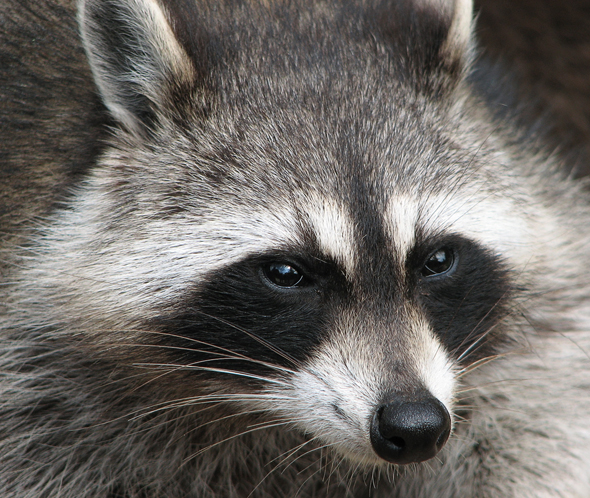
Common Raccoon (Procyon lotor). Image courtesy of Wikimedia Commons and Darkone.

According to a recent story in The Charleston Gazette, the U.S. Department of Agriculture has, in recent years, made great strides in stopping the westward spread of the raccoon variant of the rabies virus. And a promising new vaccine, typically distributed in packets dropped from airplanes, may eliminate raccoon rabies altogether.

The news came via a presentation by Richard Chipman, Assistant National Rabies Management Coordinator for USDA’s Wildlife Services (yes, that Wildlife Services), and several of his colleagues at the Northeast Association of Fish and Wildlife Agencies’ Conference in April. Read more

What’s In a Name?

In a story posted online Tuesday evening, the L.A. Times reports that a mountain lion was shot and killed after wandering “into the heart of Santa Monica.”

“With news choppers circling overhead, Santa Monica police managed to corner the 3-year-old lion in the courtyard of the [office] complex. Police said they made several attempts to calm what they described as an aggressive feline using tranquilizing darts, nonlethal bullets and a fire hose. When that failed to stop the lion from trying to escape, a police officer fatally shot it.”

I wasn’t there, and I certainly don’t know the exact circumstances of the shooting. Nor do I claim to know when such situations do, in fact, call for lethal measures. (That said, I agree with commenter Corby Baumgarten: “I can’t imagine why the police thought firing nonlethal bullets and spraying a wild animal with a fire hose would calm it down. Have such tactics ever calmed any situation down?”)

What stopped me in my tracks as I read the story was, however, not the all-too-predictable outcome, but the way Santa Monica Police Lieutenant Robert Almada described it:

“A variety of means were used to try to keep the animal back in the courtyard… The animal continued to charge and attempted to flee. It was euthanized to protect the public safety.”

I’m sorry—euthanized? Read more

2012 No More Homeless Pets National Conference

Have you registered yet for Best Friends’ No More Homeless Pets National Conference? Vox Felina readers can save an additional $25 off the early-bird rate of $275!

Simply visit the conference website, and click on “Register Now.” When asked for payment information, enter the discount code “Wolf.”

Among this year’s speakers are Becky Robinson, co-founder and president of Alley Cat Allies, Christi Metropole, founder and executive director of Stray Cat Alliance, and Ellen Jefferson, executive director of Austin Pets Alive!.

Oh, and yours truly.

Laura Nirenberg, legislative analyst for Best Friends’ Cat Initiatives, and I will be presenting Taking It to the Street (Cats): Grassroots Advocacy for Community Cats Sunday morning.

Hope to see you there!

When: October 25–28, 2012
Where: Rio All-Suites Hotel and Casino in Las Vegas
Cost:
$275 early-bird rate ($325 after September 19)

For updates and additional information, check out the conference Facebook page. Questions? conferences@bestfriends.org.

Collateral Damage


Photo courtesy of Wikimedia Commons and Eric Frommer.

Dead cats pose a threat to our national bird.

That’s the kind of headline I expected to see coming out of the American Bird Conservancy or The Wildlife Society last week, following the resolution of a Department of Justice investigation into the near-fatal poisoning of eight bald eagles last year in Wisconsin.

According to the Milwaukee Journal Sentinel, the raptors, which were rehabilitated last spring by the Raptor Education Group, “had been feeding on cats euthanized by the Vilas County Humane Society. The pentobarbital that killed the cats quickly ravaged the eagles.” [1]

Jennifer Primich, director of the Humane Society of Vilas County, apparently failed to notify operators of a local dump of the “delivery.” Rules put in place following a similar incident 10 years ago require that animals put down by HSVC be buried at the dump.

Primich, explains Journal Sentinel reporter John Diedrich, “will be required to perform community outreach over the next year. She must speak to shelters about properly disposing of euthanized animals. It is not a criminal matter. If Primich performs the service, she will have no record.” [1]

It’s not like ABC or TWS to overlook an opportunity to further vilify cats. (Both jumped on the news, reported in April, that coyotes had been spotted in Lower Manhattan. ABC used the opportunity to grossly misrepresent results of a 2005–06 study, claiming (falsely) “that outdoor cats make up 13-45 percent of coyote diets.”)

That both ABC and TWS chose to pass on this one (so far, anyhow) has, I suspect, little to do with the fact that the cats in question were in no way responsible for the eagles’ poisoning. Such details seldom factor into their media communications.

Then again, I don’t imagine either organization is eager to bring up the topic of secondary poisoning—a risk that’s bound to increase significantly if they have their way and tens of millions of cats are euthanized killed across the country.

Literature Cited
1. Diedrich, J. (2012, May 7). Bald eagles recover from eating euthanized cats. Milwaukee Journal Sentinel, from http://www.jsonline.com/news/wisconsin/bald-eagles-recover-from-eating-euthanized-cats-ns5ah7v-150542725.html

Who’s Your (Cat) Daddy?

If you’re in the Phoenix area, please join me on Thursday, May 17th when Cat Daddy Jackson Galaxy will be here for two special events promoting his new book Cat Daddy: What the World’s Most Incorrigible Cat Taught Me About Life, Love and Coming Clean.

Lunch with Jackson: Special Fundraiser for Spay/Neuter Hotline’s TNR Program
Duck & Decanter (1651 E. Camelback Road, Phoenix, AZ) is hosting a lunch (vegetarian and vegan options) from noon until 2:00 pm. Tickets are $50 per person (includes lunch and a copy of Cat Daddy). The event will be held in a private area and limited to just 60 attendees. Jackson will be signing books and greeting guests.

Jackson is a huge supporter of TNR, and was impressed by how many other supporters he met during his February visit. So, a portion of each ticket sale will be donated to the Spay/Neuter Hotline’s TNR program. Last year, this program—one of the largest in the country—sterilized more than 10,000 community cats, and it’s on track for 12,000 this year. Since its founding in 2009, the Spay/Neuter Hotline has sterilized more than 30,000 of the area’s free-roaming cats.

Reserve your tickets now by calling Duck & Decanter at 602-274-5429. This event is sponsored by Changing Hands Bookstore, Duck & Decanter, and Vox Felina.

Book Signing at Changing Hands Bookstore in Tempe
Thursday evening, Jackson will be at Changing Hands Bookstore in Tempe for a book signing. Anyone who purchases a copy of Cat Daddy from Changing Hands (pre-order online) will be issued two tickets for the book signing. Doors open at 6:00 pm for people with tickets. At 6:45, any remaining seats (don’t count on it!) will be open for general seating. The event starts at 7:00.

The book signing is sponsored by Changing Hands Bookstore, Tarcher/Penguin Books, and Moderncat.

Pre-order Cat Daddy and help shelter cats
Only one day left! Order your copy of Cat Daddy before May 10th, and Tarcher/Penguin will donate $1.00 to the cause of saving shelter cats. To make your pre-order count, simply e-mail a photo or scan of your receipt to: CatDaddyBook@gmail.com.

Donations will go to Best Friends Animal Society, Stray Cat Alliance, and Neighborhood Cats.

Also:
• Read my review of Cat Daddy for Moderncat.
Cat Daddy book tour details.
Cat Daddy audio book info.

Reform, Retire, or Simply Reload?

Despite the evidence that non-lethal methods can be effective, Wildlife Services continues its killing. Indeed, the greatest change at the agency seems to be its increased interest in targeting “invasive” species with “traditional” techniques.

Preview of Wild Things, produced by the Natural Resources Defense Council, to be released early this summer. (Video not displaying properly? Click here.

Yesterday The Sacramento Bee ran the third and final story in its series investigating Wildlife Services, a little-known (until now) agency under the U.S. Department of Agriculture’s Animal and Plant Health Inspection Service.

In Part 1, two-time Pulitzer Prize-winner and Bee reporter Tom Knudson focused on Wildlife Services’ controversial practices and secrecy; Part 2 looked at the environmental consequences of the agency’s activities. For Part 3, Knudson spoke with a range of stakeholders demanding changes at Wildlife Services.

“Ideas for reform include more nonlethal control, curtailing aerial gunning, a ban on traps, snares and cyanide poison and pouring more resources into controlling invasive species. Some critics are calling for an investigation of Wildlife Services’ trapping practices and perhaps eliminating the agency altogether.” [1]

Four points stood out for me: Read more

Contract Killing: The Gift That Keeps on Giving

Wildlife Services’ killing campaigns are not only brutal, costly, and ineffective—they may actually contribute to an increase in the population of the coyotes targeted by the agency.


In the second part of The Sacramento Bee’s three-part series investigating Wildlife Services, published Tuesday, reporter Tom Knudson sheds some light on the dubious rationale behind the agency’s methods. [I discussed the first installment in my previous post.]

“For decades,” writes Knudson, “Wildlife Services, part of the U.S. Department of Agriculture, has specialized in trapping, poisoning and shooting predators in large numbers, largely to protect livestock and, more recently, big game.”

“Now such killing is coming under fire from scientists, former employees and others who say it often doesn’t work and can set off a chain reaction of unintended, often negative consequences.” [1]

(Many readers will recall that I made a similar argument in my February 2011 letter to the U.S. Fish and Wildlife Service—no “relation” to Wildlife Services, though they seem to share the same penchant for lethal control methods and secrecy—regarding their ill-conceived Florida Keys National Wildlife Refuges Complex Integrated Predator Management Plan.)

“With rifles, snares and aerial gunning,” writes Knudson, “employees have killed 967 coyotes and 45 mountain lions at a cost of about $550,000. But like a mirage, the dream of protecting deer by killing predators has not materialized.” [1]

This despite a significant increase in the killing. Read more
